How to be the most Extraordinary You!
You’ve probably heard me talk many times over the years and share stories about my son Jelani. I’ve been asked in SO many interviews about how I juggled parenthood with my career. As we all know parenting doesn’t come with an instructional manual, but I believe the most successful parenting techniques come from allowing yourself to be a student learner while still being a leader in your household.
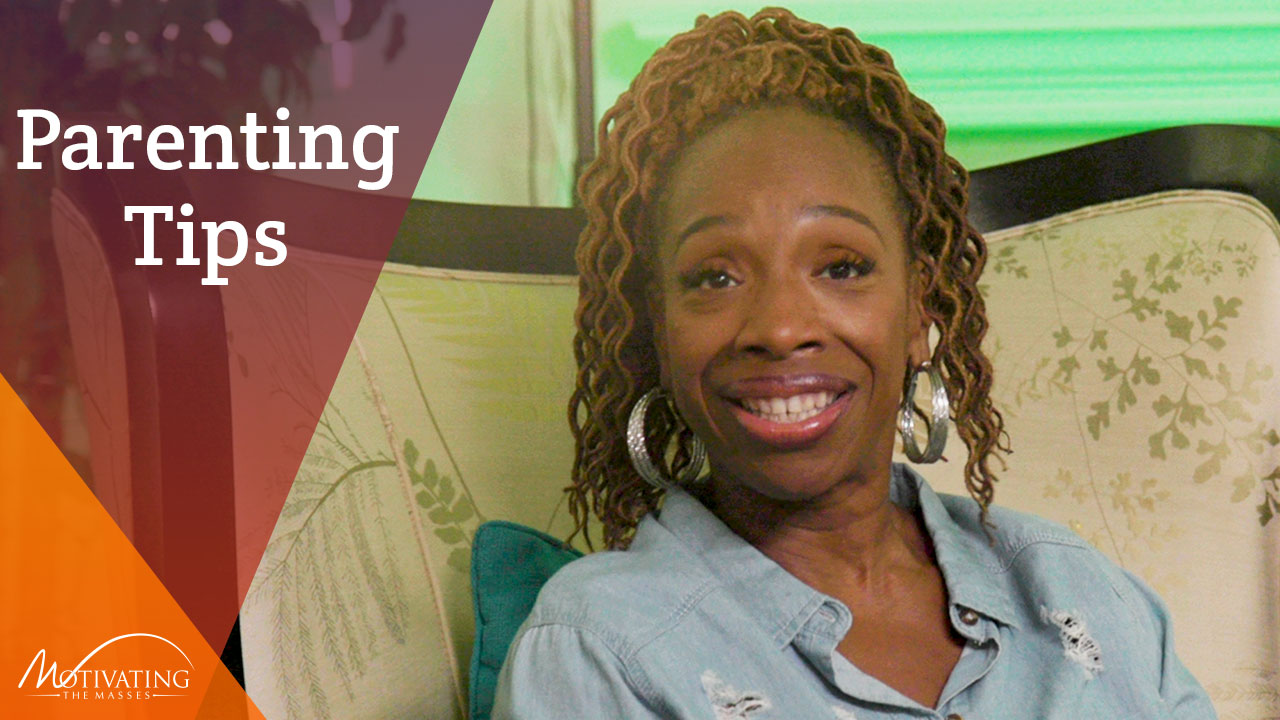
So, for this week’s blog I wanted to do a little something different and share with you an unplanned, unscripted, behind-the-scenes COURAGEOUS, DYNAMIC and DELICIOUS conversation around parenting that I had with some of my Motivating the Masses team members.
This started off as an off-camera conversation after a busy production day that we decided needed to be its own topic. So we turned the cameras back on, and I answered my team’s real-life parenting questions and provided my top parenting tips!
Now I don’t pretend to be a perfect parent, but my son and I have achieved what I would want to achieve as a parent now that he is an adult. Jelani chooses me as a friend and a safe space.
If you are pregnant or expecting a baby, a parent of a newborn, a parent of young, pre-teen, teen, college-aged children or if you are a grandparent, you might get some value so let’s dive in.
Tip #1 – Start with the end in mind.
Begin with the end in mind. Adulthood is not the end of your parenting relationship, but it’s the end of an error of parenting. So, it is important to understand what you want to have in place when you graduate yourself as a parent of a young adult. Those outcomes are going to guide the way you engage with your children.
I believe that sometimes parents of adult children who don’t speak to them anymore, or who have strained relationships may not have begun with an end in mind. They may have thought, I’m always going to be your mother or father, but what they didn’t always think about is that their adult child is in a place of choice now. So, think about what you want him or her to say about the way you engage with them. Allow that to guide you when they frustrate you.
Tip #2 – Course correcting behavior.
When you are course correcting a behavior, you are not reprimanding just for the sake of reprimanding. You are course correcting because the behavior itself was incorrect. And that behavior came from a choice. The best gift you can give your child is to let them know the power of choice because that’s going to keep them in line to understand that their choices produce results. It’s also going to let them know they have freedom of choice, so they won’t become a victim to life.
They will know that they choose their life. For example, when I choose to clean my room, my life is great and I get to go out with my friends. When I don’t choose to clean my room, I don’t get to do those things. Jelani never thought he was punished. He began to tell his friends when they would ask, “Why can’t you go to the dance this weekend?” that it was because he didn’t choose to do his homework. He would say “My choices landed me home Saturday night.”
I would love to hear him say that because then I wasn’t the culprit. I wasn’t the bad guy. It was his choice. He learned if he wanted different results, then he needed to make different choices. That’s a beautiful lesson because then they’ll never blame the system. They won’t be a victim to their life, and you won’t be the bad guy in the house.
Tip 3 – Create structure.
One of the things I had to learn to do was to create structure and consistency for Jelani. He needed constant, consistent routines because all children do. These rituals become a safety blanket. They can also become your reprieve because now you can point to the routine, not just to use your voice to tell them what to do all the time.
Letting your child help co-create the routines is powerful because we tend to support what we help to create.
Tip 4 – Use “fill-in-the-blanks” with connected behavior and results.
I would always use a lot of fill-in-the-blanks to reinforce what choices produced what results. The results have to be some form of takeaway or hard stop that is attached to the choice.
I chose not to __________, so I can’t ____________.
“I chose not to wash the dishes, so I can’t watch television.”
“I chose not to do my homework, so I can’t go to the park.”
A lot of parents tend to lecture, and when you lecture you are actually completing the sentence for your child. When your child is able to correlate and connect the behavior to the result, you can then say, “Great, now you know and you can make a different choice next time.”
Tip #5 – Talk, don’t yell.
When you yell, you actually have less of an impact because you have now added another ingredient to the situation and all they hear is the yelling, not the message. When you speak in a calm, conversational tone, they are able to understand that their choices resulted in a logical consequence. It’s like a police officer who pulls you over to give you a speeding ticket because you’re breaking the law. They don’t yell at you, because they know that $500 ticket is going to do the yelling for them.
So think of yourself as the law enforcement of your home. You don’t need to yell. A friend of mine gave me some great advice years ago, and it hurt me. I mean it really stung, but it changed EVERYTHING for me. I’ll share it with you, and this is not me judging or speaking badly about any parenting styles. He told me ignorant parents yell, curse and whip their kids. Now I was raised getting a spanking, and I had been spanking Jelani up until that point. So, I asked him why? He said because they’ve run out of words. So now they use curse words. They run out of words, so they yell those same words. They’ve run out of words. So now they hit instead of using words. I thought, well I’m not ignorant, and I definitely don’t ever run out of words. So, I made a choice not to yell routinely. I was able to guide Jelani. He’s not a perfect kid. I’m not a perfect parent, but we had a really good dance together. And he’s a really good person. And I was able to guide him through conversations about choices and results.
Tip # 6 – Block out time that is JUST for your children.
I think I’ve been asked the most in interviews is “How have you juggled building a business with parenting?” My answer is time blocking. I started doing this when Jelani was 8, and it was a game changer for us. I would block out time in the morning to prepare him for school, and time in the evening to either cook dinner together or hang out before bed. I carved out time in my day solely for Jelani and was still able to get everything done that I needed to get done.
I read a study back in 2007 that said the average parent spent 12 minutes a day with their child, and the majority of that 12 minutes was spent dictating not listening. So, I made a commitment that I was going to do way better than 12 minutes and that I would spend 90 minutes of my time a day with Jelani engaged in a dialogue not a monologue. During that time, I would get down on his level in his room and play whatever he wanted with him. It was always Monopoly. Now, I hated monopoly (don’t tell Jelani) because it never ended. But each night we would put a towel over the game and continue it the next day.
Jelani got used to that 90 minutes a day and would look forward to it. He would be waiting at my office door. And I never violated that 90 minutes either. It was consistent. I would have a timer, and he would respect the time as he knew he never needed to fight for it. There was never a project that was more important or superseded our time. Now as he grew older, his needs changed, and it went down to about 45 minutes a day.
Years later when I asked him about my parenting and what I could have done better, the first thing he said to me was you always let me know that I was your priority. I never wondered if anything was more important than me because you gave me my time. So, I invite you to create that time with your children. And during that time, whether you’re playing Connect Four, Operation, the dreaded Monopoly (LOL) or something that builds motor skills or electronics if that’s their thing, be present with them and stay engaged with them.
Tip # 7—Allow yourself to be a student learner.
There’s always so much to learn as a parent. Each age and stage is new and you’ve never done this before. I would always tell Jelani on every birthday, “Now, remember it’s mommy’s first time parenting a ten-year-old. Now remember it’s mommy’s first time parenting a 13-year-old, etc” When Jelani was 18, I said or did something stupid. I looked at Jelani and I said, “I apologize. Mommy just made a poor judgment.” And he looked at me and said, “It’s okay, mom, it’s your first time parenting an 18-year-old.”
You have these little mini-humans, and they are no less brilliant than we are. They’re just brilliant in different ways. Give them permission to dream because they watched you dream. Give them permission to fly because they saw you take the leap. But most importantly, give them permission to get up because they watched you fail and do the same. That’s the best gift you can give them; the gift to safely fail and still win.
I love reading your comments so please share with me below what hit home for you. What was your #BOL (breakthrough out loud)? Which tip are you going to implement?
Remember…THIS is your community, and WE are your tribe. YOU are part of my extended family. And when I say I love you and I believe in you, it’s because I truly do.
Your Sister in Prosperity and Possibility,